SEO vs Paid ads: Which one actually brings more leads in 2026?
If you have ever sat in a meeting comparing a search proposal to an ads proposal, you know the problem: both sound like they will “bring leads”, but the timelines and the maths are completely different. In 2026, the most reliable answer is not “SEO or paid”, it is knowing what search engine optimization and google ads each do best for your funnel in India, then building a plan you can measure in your CRM.
SEO compounds, but it asks you to earn trust with search engines and users.
Paid search and social media marketing can switch on demand, but they switch off when the budget pauses.
So, I am going to compare cost, time to results, and lead quality, then show you a practical way to combine SEO and paid ads without wasting spend or waiting months for clarity.
Key Takeaways
- SEO builds compounding organic traffic, and many sites start seeing meaningful movement in roughly 3 to 6 months once you publish consistently and fix technical issues.
- Core Web Vitals still matter for user experience: aim for LCP at 2.5 seconds or less, INP at 200 ms or less, and CLS at 0.1 or less for most visits.
- Paid ads deliver immediate lead volume, but in India, many 2025 to 2026 benchmark guides put Search CPC in the broad ₹5 to ₹150 range, so you need tight targeting and landing pages that convert.
- Use a hybrid model: test keywords and offers with paid search, then turn winners into content optimisation and landing pages that reduce long-term cost per acquisition.
- Google’s own Search Essentials documentation shows it was last updated on 10 December 2025, which is a useful reminder to keep your SEO playbook aligned with current spam policies and technical requirements.
What is Search Engine Optimization (SEO)?
Search engine optimisation (SEO) is the practice of improving your site so search engines can crawl, understand, and rank it in search engine results pages.
In lead generation terms, SEO is your “always-on” channel. You invest in useful pages, solid user experience, and technical health, then you earn clicks without paying for each one.
You will usually use tools like Google Search Console (for indexing and performance), plus SEMrush or Ahrefs (for keyword research, competitive research, and backlink analysis). Teams also use ChatGPT and Gemini to speed up outlines and content briefs, then refine copy with real expertise and proof.

Definition and key practices
SEO focuses on three pillars: on-page optimisation (what you publish), off-page optimisation (how the web references you), and technical SEO (how your site functions for users and crawlers).
The phrase “search engine optimisation” came into use around 1997, and industry analyst Danny Sullivan later credited Bruce Clay as one of the early people who helped popularise the term.
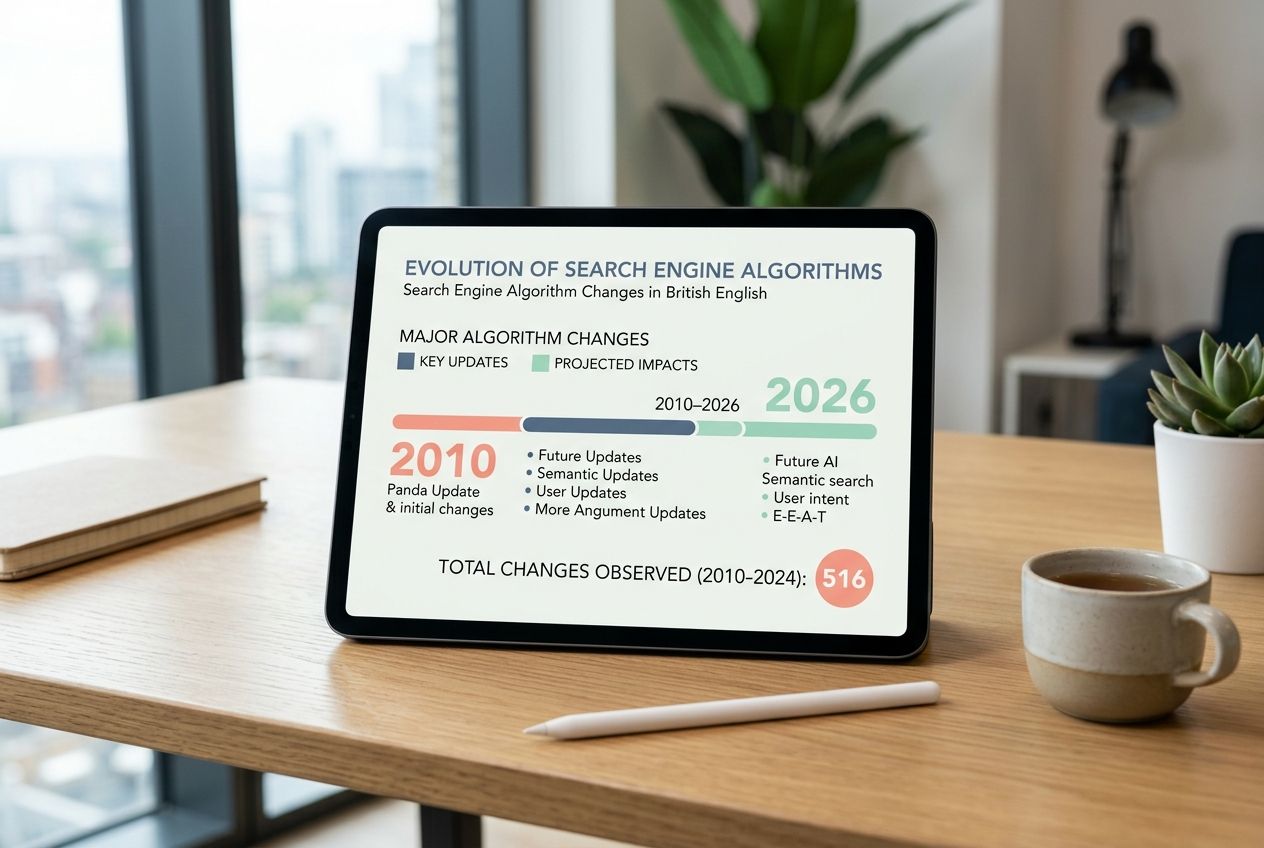
Search changes are constant. In one public testimony, Eric Schmidt stated that Google made 516 useful algorithm changes in 2010, which is the right mindset for 2026 too: build fundamentals that survive updates, not tactics that depend on loopholes.
For 2026, “good SEO” usually means you do these basics well, every month:
- Match pages to intent: one page, one job (service page, comparison page, pricing page, case study, or FAQ-style support).
- Improve snippets: strong title tags, helpful meta descriptions, and clear header tags that make scanning easy.
- Publish proof: testimonials, case studies, photos of real work, and clear terms, especially for local businesses.
- Earn links without shortcuts: use PR, partnerships, and genuine resources instead of paid link schemes.
- Track outcomes: connect Search Console queries to lead quality in your CRM, not just clicks.
Types of SEO: On-page, off-page, and technical
The “types of SEO” list gets long, so I like to keep it practical: each type exists to remove friction between a motivated searcher and a conversion.
Here is how to prioritise, with a 2026 lens.
- On-page optimisation: map your keywords to the right pages, tighten content structure, reduce duplicate content, and keep your URL structure predictable.
- Off-page optimisation: build authority through quality mentions and links, and clean up patterns that look like irrelevant backlinks or manipulation.
- Technical SEO: make crawling and indexing easy, fix redirects and canonical issues, and keep your site fast on mobile.
- Core Web Vitals: Google’s tooling groups performance by LCP, INP, and CLS, based on real user field data. Web performance guidance commonly targets LCP at 2.5 seconds, INP at 200 ms, and CLS at 0.1 for most visits.
- Structured data (schema): add relevant schema to improve SERP features like rich snippets and “people also ask”, where it fits your content honestly.
- JavaScript SEO: confirm important content renders without relying on delayed scripts, and test with crawlers and audits.
- Local SEO: tune your local listings, local landing pages, and city-specific relevance so you can win map-pack and “near me” searches.
If you want one high-impact workflow, use this weekly loop:
- Check indexing and coverage issues in Google Search Console.
- Review pages losing clicks, then improve clarity, proof, and internal linking.
- Run a technical audit (SEMrush, Ahrefs, or a crawler) and fix the top issues first.
- Track leads back to their landing page, then update content to match what converts.
What are Paid Ads?
Paid ads are placements you buy on search engines and social networks, usually through pay-per-click bidding or impression-based pricing.
For lead generation, paid ads work best when you need feedback quickly, you have a clear offer, and you can track conversions properly.
In India, the “fast visibility” benefit is real, but so is wasted spend if your targeting, keywords, and landing page experience are weak.
Definition and common platforms
Paid ads sit inside auction systems. On Google Ads, your results depend on your bid, your ad quality, and how well your landing page matches the searcher’s intent.
Google’s own Ads Help documentation breaks Quality Score into three core components: expected click-through rate, ad relevance, and landing page experience. If you want lower CPC and better lead quality, start there.
Common platforms you will see in a 2026 lead-gen stack include:
- Google Ads for high-intent search engine marketing.
- Microsoft Advertising (formerly Bing Ads) to reach users on Microsoft’s search network.
- Meta (Facebook and Instagram) for interest targeting and retargeting, including lead forms that open inside the app.
- LinkedIn for B2B targeting by job role, seniority, and company attributes.
Types of paid ads: Pay-per-click (PPC), display ads, and social media ads
Most businesses run some mix of PPC, display, and social media marketing. The key is choosing the format that matches your sales cycle, not the one that looks busiest in a dashboard.
- PPC search ads: Best for “ready to buy” queries. Use tight keyword research, strong negatives, and landing pages built for one conversion goal.
- Display and video: Best for awareness and remarketing. Keep expectations realistic, they rarely beat search for first-touch lead intent.
- Social media ads: Best for discovery, retargeting, and offers with a clear next step (demo, quote, consultation, booking).
- Lead forms vs website forms: In-platform lead forms reduce friction, but many advertisers report lower-intent submissions. If lead quality is poor, add qualifying questions or switch to a website form with clearer commitment.
- Measurement and follow-up: Connect your ad platform to your CRM, score leads, and train the system on qualified outcomes, not just raw form fills.
If you want a simple control knob for cost per lead, focus on these three levers first:
- Offer clarity: A specific outcome beats a generic “contact us”.
- Landing page speed: Improve mobile load and reduce layout shifts to support conversions.
- Conversion tracking: track calls, forms, and key actions, then optimise to qualified leads.
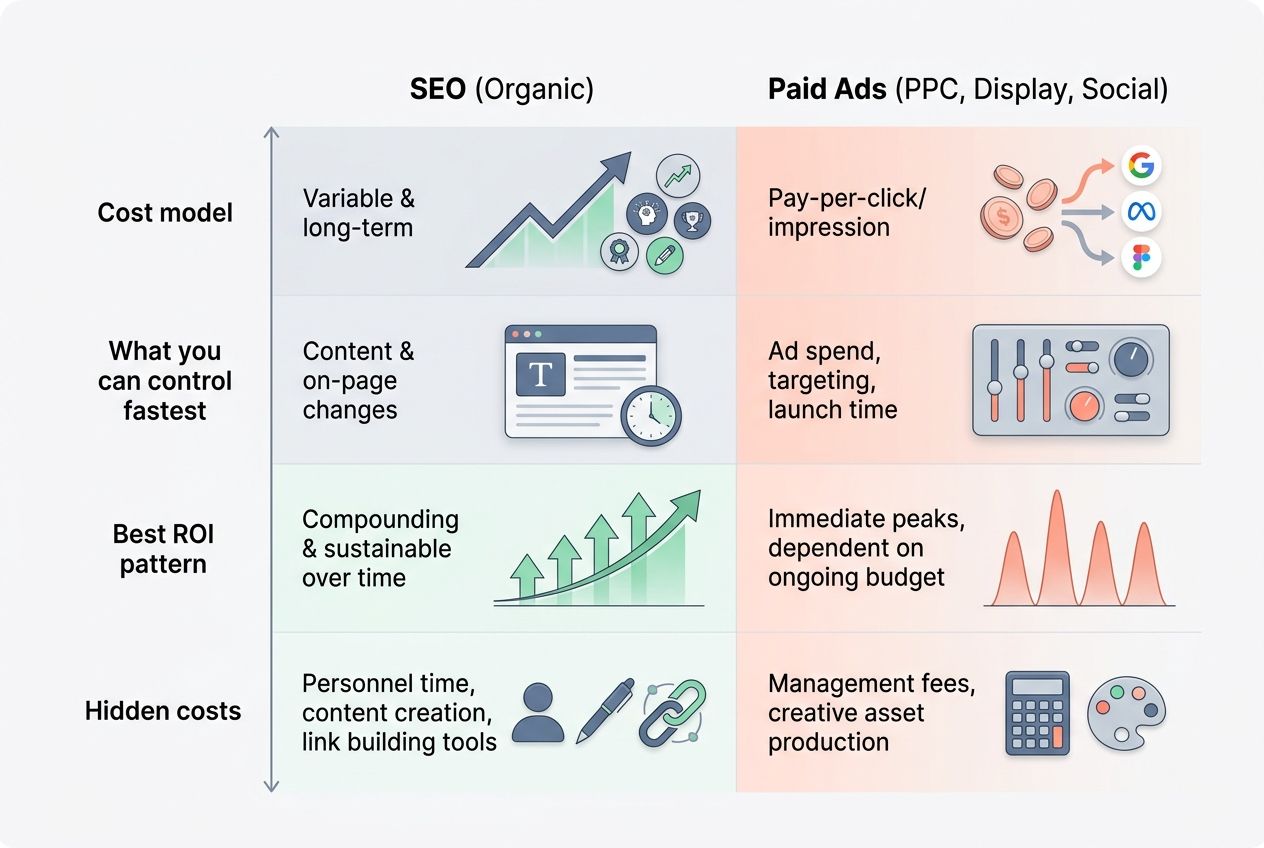
Comparing Lead Generation: SEO vs Paid Ads
SEO and paid ads can both generate leads, but they behave differently under pressure. SEO rewards consistency and user experience, while paid search rewards focus, tracking, and ongoing optimisation.
The easiest way to choose is to compare cost per acquisition, time to first leads, and how long results last after you pause work.
Cost-effectiveness and ROI
Cost-effectiveness comes down to one question: what does a qualified lead cost you after sales follow-up?
Here is a concise comparison for SEO and paid ads, with practical action notes.
| Point | SEO (Organic) | Paid Ads (PPC, Display, Social) |
|---|---|---|
| Cost model | Upfront investment in content optimisation, technical fixes, and link building. You do not pay per click. | You pay per click or per impression. Leads usually stop when spend ends. |
| What you can control fastest | On-page optimisation, internal linking, and technical health, then you wait for crawlers and ranking shifts. | Budgets, targeting, creative, and landing pages can change the same day. |
| Best ROI pattern | Compounding returns when you build a library of pages that rank and convert. | Predictable volume when tracking is clean and your offer is proven. |
| Hidden costs | Content production, site maintenance, and time. Poor-quality SEO can create recovery work later. | Management time, creative churn, and wasted clicks if targeting is loose. |
| How to measure correctly | Track leads by landing page and query theme in your CRM, not just organic traffic. | Optimise to qualified conversions, then back-test lead quality by campaign and keyword. |
| Best use case | Businesses that want sustainable organic search leads and can invest steadily. | Businesses that need leads now, want fast testing, or have seasonal demand. |
If you want a quick ROI sanity check, use this:
- Cost per lead (CPL) = ad spend ÷ leads.
- Cost per qualified lead = ad spend ÷ qualified leads.
- Cost per acquisition (CPA) = ad spend ÷ customers.
Time to generate leads
Time matters most when you need leads fast, or you need evidence to justify a bigger budget.
| Channel | Typical time to first leads | When changes show in results | How to check indexing or visibility | Adjustment speed | Action notes |
|---|---|---|---|---|---|
| SEO (Organic) | Often weeks to months. Many brands see clearer momentum around 3 to 6 months with consistent work. | Technical fixes can reflect after re-crawls, rankings can take longer to settle. | Use Google Search Console’s URL inspection and performance reports, and spot-check with a site: search like site:yourdomain. | Medium to slow. | Start with pages closest to revenue (service pages, location pages, pricing), then build supporting content. |
| Paid Ads (PPC, Display, Social) | Often same day once campaigns are approved and tracking is working. | Changes can influence delivery quickly, but learning periods still apply for automated bidding. | Check Google Ads, Meta, and LinkedIn dashboards, then confirm conversion events in analytics and CRM. | Fast. | Use paid search to test keywords and offers, then carry winners into SEO pages. |
Sustainability of results
SEO is built for durability. Once you rank for a valuable query, you can keep earning organic traffic even if you pause spend, as long as competitors do not outpace you and your pages stay useful.
Paid ads are built for control. You can scale or pause quickly, but results stop when you stop funding campaigns.
If you want the most stable position in 2026, treat SEO like product maintenance: update pages, improve user experience, and keep your site aligned with Search Essentials spam policies.
Choosing the Right Strategy for 2026
The best strategy is the one you can sustain and measure. In India, you will also feel wide variation in prices and promises, so your process matters as much as the channel.
Start by setting a lead goal, then choose the mix of SEO and paid ads that can hit it with your current budget and timeline.
Factors to consider: Budget, timeline, and business goals
To keep this decision grounded, I suggest you choose based on three constraints: how fast you need leads, how certain you are about your offer, and how much tracking discipline you have.
- If you need leads this month: Prioritise google ads and retargeting, and run SEO in parallel on your highest-intent pages.
- If you need lower CPA over time: Prioritise search engine optimization (seo), then use paid ads for testing and gap coverage.
- If your offer is still changing: Use paid ads to test messaging, then lock in your best angles as evergreen SEO pages.
- If your site is slow on mobile: Fix Core Web Vitals early. Speed problems harm both SEO and paid conversion rates.
- If lead quality is inconsistent: Tighten conversion tracking and CRM stages, then optimise to qualified leads.
For budgeting in India, several 2025 to 2026 pricing guides place monthly SEO retainers for small and medium businesses in the rough ₹15,000 to ₹50,000 range, with higher budgets for competitive niches and e-commerce.
| Your situation | What to do first | What to do next |
|---|---|---|
| New website, little organic traffic | Technical SEO foundation, indexing checks, core pages (services and locations) | Run paid search on top-intent keywords while content builds traction |
| Good traffic, weak conversions | Landing page improvements, offers, forms, call tracking | Remarketing and conversion-rate optimisation, then expand SEO content |
| Strong word-of-mouth, low online visibility | Local SEO pages, reviews, clear service proof, fast mobile experience | Use paid ads for peak seasons and to test new services |
Combining SEO and paid ads for maximum impact
Combining channels works best when you use each one for what it can do quickly, then feed learnings back into the other channel.
Here is a practical workflow that tends to produce steady leads without wasting spend:
- Use paid ads to learn: Run small tests on 10 to 30 keywords, and track which queries generate qualified leads.
- Turn winners into SEO assets: Build a dedicated page for each proven theme, with clear headings, proof, FAQs, and strong internal links.
- Use SEO to lower long-term CPA: As pages rank, reduce paid coverage on expensive, low-margin terms.
- Protect performance with user experience: Keep pages fast, stable, and easy to complete on mobile.
- Report in business metrics: Revenue, qualified leads, and close rate, not impressions and clicks.
If you work with a digital marketing company, ask them to show how they connect Google Search Console insights, SEMrush or Ahrefs data, and CRM stages into one report. That is where you see if your “leads” are turning into customers.
Conclusion
In 2026, search engine optimization is still your best route to compounding organic traffic, while google ads can deliver leads on day one.
Use Search Console and Core Web Vitals to protect user experience, and build pages that match real search intent.
Then combine SEO, PPC, and social media marketing so you can hit short-term targets without locking your business into permanent ad spend.
FAQs
1. Which brings more leads in 2026, SEO or paid advertising?
Neither wins every time, SEO builds steady, lower-cost leads over months, while paid advertising delivers fast, targeted leads you can scale quickly.
2. Can social media marketing beat SEO or paid advertising for leads?
Social media marketing often raises awareness and can drive cheap leads when you target well.
3. Which should I choose if I need leads next month?
Pick paid advertising for quick leads, test different ads and landing pages, and keep some budget for short-term social campaigns.
4. How do I tell which channel gives the best leads?
Track conversions, cost per lead and customer value in your CRM, run A/B tests across SEO, paid advertising and social media marketing, then move budget to the top performer.