Claude SEO: How to Optimise Your Site to Rank on Claude?
Trying to get noticed in Claude can feel strangely slippery. We do the usual search engine optimization work, then our pages still miss the answers that people actually see.
That usually happens because Claude SEO is not just about keywords. It depends on whether our pages are easy to crawl, easy to verify, and easy to quote.
We are going to walk through the fixes that matter most, from content optimization and title tags to robots.txt, sitemaps, structured data, mobile optimization, and backlinks. Stick with us, and we will make this much simpler.
Key Takeaways
- Start with the crawler layer. Anthropic now separates ClaudeBot, Claude-User, and Claude-SearchBot, so one robots.txt rule can affect training, live fetches, and Claude search visibility in very different ways.
- Make every important page answer-ready. Clear headings, original evidence, updated facts, and E-E-A-T signals give large language models more confidence in quoting your content.
- Keep technical seo clean. Fast pages, responsive layouts, canonicalization, honest sitemap dates, and crawlable HTML are still the foundation for both classic search engines and AI search.
- Write meta descriptions and title tags for people first. Google can use the title element and may use the meta description when it helps searchers, so clarity beats keyword stuffing every time.
- Track more than rankings. We monitor prompt coverage, crawling and indexing, Core Web Vitals, referral traffic, and backlink quality, then refresh pages before they go stale.
What is Claude SEO?
Claude SEO is the part of search engine optimization focused on helping our pages appear in Claude’s web-enabled answers. In practice, that means we optimise for retrieval, trust, and quotability, not just for a blue-link SERP position.
It sits close to generative engine optimization. The difference is that we are shaping content for a system that reads, summarises, cites, and compares sources in a conversational format.
A 2024 KDD paper on GEO found that content changes such as stronger statistics, quotations, and clearer wording could lift visibility in generative engine responses by up to 40%. That is why thin copy rarely works here, even if it once ranked well in traditional search.
- Classic SEO helps pages rank in search engines like Google Search and Bing.
- Claude SEO helps pages become credible source material for Claude.
- The overlap is big: technical seo, on-page seo, off-page seo, search intent, and user experience still matter.
- The extra layer is evidence. Claude needs pages that answer a question clearly enough to reuse.
For most businesses, the goal is simple. We want our site to be the page Claude can confidently pull from when someone asks for a definition, comparison, how-to guide, buying advice, or a local recommendation.
Understanding How Claude Ranks Content
Claude does not publish a neat public ranking formula. So we work backwards from what its help documentation, crawling setup, and modern SEO evidence make clear: Claude needs access to the page, enough context to understand it, and enough trust signals to cite it.
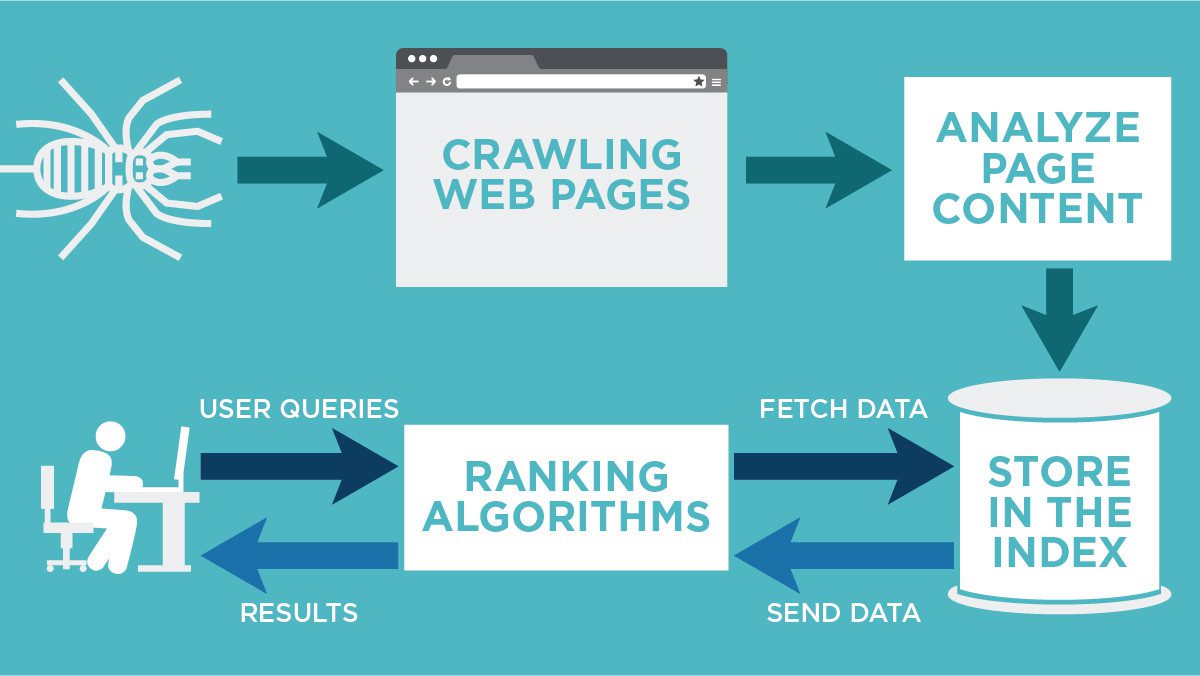
Crawling and indexing process
The first job is getting the right bots to the right pages. Anthropic’s help centre now splits its web activity across three separate bots, which gives site owners much finer control than the old all-or-nothing setup.
| Bot | What it does | What it means for Claude SEO |
|---|---|---|
| ClaudeBot | Collects public web content that may contribute to model training. | Block this if you do not want future content considered for training datasets. |
| Claude-User | Fetches pages when a user asks Claude to access a site. | If you block it, Claude may fail to retrieve your page during user-led web search. |
| Claude-SearchBot | Indexes online content to improve search result quality for users. | If you block it, you can cut your visibility in Claude’s search responses. |
That split creates a useful technical seo choice. We can block training access while still allowing search visibility, or we can allow live fetches for support content but keep some sections out of indexed search experiences.
Robots.txt still matters, but it is easy to misuse. Anthropic says its bots respect robots.txt and even support Crawl-delay, while Google’s robots documentation states that fields such as Crawl-delay are not supported there, so one rule set will not behave the same way for every crawler.
- Keep robots.txt as a plain text file and review it after every platform change.
- Audit each subdomain separately, because bot rules often break on help centres, blog subdomains, and staging environments.
- Do not hide critical copy behind heavy JavaScript if the HTML source is thin.
- Check server logs so we can see whether Googlebot, Claude-User, and Claude-SearchBot are actually reaching priority URLs.
One more trap catches a lot of teams. Google states that a page blocked by robots.txt can still appear as a URL in search results, and its noindex rule only works if the crawler can access the page. So if we want a page excluded from indexing, we use noindex, not a blunt crawl block.
Key ranking factors on Claude
Once crawling and indexing are under control, Claude SEO becomes a quality problem. The pages that win tend to be the ones that are easiest to trust, easiest to parse, and easiest to quote without guesswork.
- High-quality, source-backed content: Original statistics, product details, expert commentary, and specific examples give Claude something solid to reuse. Vague sales copy does the opposite.
- Entity clarity: Use the same company name, product names, service areas, and support facts across your site. This matters because Claude’s web search responses include citations, so inconsistent pages can produce inconsistent answers.
- Search intent fit: Pages built around one clear job, such as “what it is”, “pricing”, “comparison”, or “troubleshooting”, are easier for AI search to match to a user prompt.
- Evidence density: The 2024 GEO research is a strong hint here. Well-placed numbers, quotations, and readable explanations give generative systems more confidence than broad claims with no proof.
- Performance: Google’s current Core Web Vitals guidance still uses LCP under 2.5 seconds, INP under 200 milliseconds, and CLS under 0.1 as the “good” thresholds. Fast pages help users and give crawlers fewer reasons to stall.
- Machine-readable structure: Clean header tags, sensible url structure, breadcrumb markup, meta tags, and structured data help search engines understand the page quickly.
- Authority signals: Strong backlinks, cited studies, press mentions, and consistent brand references across the web make your page safer for Claude to lean on.
On-Page Optimisation for Claude
On-page optimization is where we turn a readable page into a reusable one. The goal is not stuffing more keywords into the copy. The goal is helping Claude, Google Search, ChatGPT, Gemini, and Perplexity understand exactly what the page answers and why our explanation deserves attention.
Using relevant keywords
Traditional keyword research still helps, but Claude SEO needs a prompt mindset as well. People ask full questions in AI search, so we target phrases that mirror that language instead of leaning on a pile of disconnected head terms.
A smart keyword map usually combines one primary topic page with supporting pages for comparisons, implementation, pricing, and common mistakes. That structure builds topical authority and gives Claude several chances to find us.
| Intent type | What people ask | What we publish |
|---|---|---|
| Definition | What is Claude SEO? | A clear explainer with examples, glossary terms, and a short summary near the top. |
| Comparison | Claude SEO vs traditional SEO | A side-by-side page with trade-offs, use cases, and who each method suits. |
| Action | How do I optimise robots.txt for Claude? | A practical how-to page with steps, common errors, and what each bot does. |
| Commercial | Best Claude SEO agency or tool | A service page backed by proof, case studies, process details, and FAQs. |
- Place the primary keyword early, but make the opening answer useful, not mechanical.
- Use related entities, such as technical seo, structured data, search console, and backlinks, where they genuinely help the reader.
- Group keywords by search intent so each page solves one problem well.
- Refresh keyword research with Search Console, Google Trends, Ahrefs, Semrush, Moz Pro, or Keyword Explorer, then prune terms that bring impressions but no relevant clicks.
- Avoid keyword stuffing. Google’s snippet guidance is blunt on this point, long strings of keywords do not help users and are less likely to be shown well.
If India is one of your target markets, make that explicit in the copy. Service areas, currencies, delivery zones, state-level terms, and local examples help Claude match your page to a localised query instead of treating it as generic global content.
Crafting compelling titles and meta descriptions
Title tags and meta descriptions still shape first impressions. Google says the title link usually comes from the title element, though it can also be influenced by links pointing to the page. That makes internal anchor text part of the title story, which many teams miss.
Meta descriptions are not a guaranteed display line, but Google states it may use the description tag when it gives searchers a more accurate summary than the visible page copy. In other words, they are still worth writing, especially for high-value URLs.
- Write one unique title and one unique meta description for each important URL.
- Lead with the page topic, then add the benefit or outcome.
- Mirror the promise in the headline and opening paragraph so the page feels consistent after the click.
- Use descriptive internal links, because those links can reinforce how a page is understood.
- For large sites, generate descriptions programmatically only if the output stays human-readable and page-specific.
Technical Optimisation for Claude
This is where many promising pages disappear. Strong content cannot do much if bots hit redirects, blocked files, broken canonicals, slow templates, or JavaScript that hides the real answer.

Ensuring mobile-friendliness
Google Search Central still recommends responsive design because it serves the same HTML on the same URL and is easier to maintain. That matters for Claude SEO too, because the cleanest mobile setup usually creates the cleanest crawl path.
Mobile-first indexing also creates a detail that is easy to overlook. Google warns that using different image URLs on desktop and mobile can cause temporary image traffic loss during the mobile-first transition, so keeping image URLs consistent is a safer move.
- Use responsive layouts that keep the main answer visible without horizontal scrolling.
- Make sure mobile pages contain the same critical text, metadata, and structured data as desktop pages.
- Keep important images, screenshots, and diagrams on the same URLs across device versions where possible.
- Check touch targets, font sizes, form labels, and contrast so the page works for people as well as crawlers.
- Test key templates in Lighthouse and on real phones, not just in a desktop browser window.
Mobile optimization is also a trust signal. A support guide or service page that breaks on phones looks abandoned, and abandoned pages rarely earn organic traffic, backlinks, or citations.
Improving page speed and Claude’s crawlability
Speed is one of the few technical areas where the thresholds are nicely concrete. Google’s current guidance is still LCP under 2.5 seconds, INP under 200 milliseconds, and CLS under 0.1, which makes performance audits much easier to prioritise.
We treat those numbers as a floor, not a finish line. On AI-facing pages, every delay raises the chance that crawlers see less content, users bounce, and the page loses authority signals over time.
- Reduce Time to First Byte with better hosting, caching, and sensible use of HTTP/2 or HTTP/3.
- Compress and resize images, then lazy-load media that is below the fold, not the content that answers the question.
- Trim third-party scripts, especially chat widgets, heatmaps, and tag clutter on informational pages.
- Use server-side rendering or solid prerendering for JavaScript-heavy pages so the core copy appears in HTML.
- Publish clean XML sitemaps and keep the last modified date honest. The sitemap protocol allows crawlers to fetch only updated sections, which speeds discovery on larger sites.
- Use rel=”canonical” consistently and link internally to the canonical URL, because Google recommends reinforcing the preferred version in both markup and internal links.
There is also a Claude-specific exclusion rule worth knowing. Anthropic states that a noindex tag tells its partners not to send that content into Claude web-search outputs, so do not place noindex on any page you hope Claude will surface.
Off-Page Strategies for Claude SEO
Once our own site is in good shape, Claude SEO becomes an authority problem. If the wider web does not recognise us, AI search has less reason to treat our claims as dependable.
Building high-quality backlinks
Backlinks still matter because they are one of the clearest off-page signals that other sites trust our work. For Claude, the best links do more than pass authority, they create corroboration.
- Create assets worth citing, such as original surveys, benchmark reports, calculators, templates, or detailed case studies.
- Pitch niche publications, trade associations, podcasts, and respected blogs instead of chasing random directory links.
- Use Ahrefs, Link Explorer, Majestic, or Search Console to review new referring domains and catch toxic patterns early.
- Watch anchor text variety. A natural mix looks healthier than a profile stuffed with exact-match keywords.
- Support link building with social media marketing on LinkedIn, X, and industry communities, because good content often earns links after it earns attention.
The best link prospect is usually a page that already needs what you have. Fresh data, a practical framework, or a useful visual wins more links than another opinion piece on a topic that is already crowded.
Establishing authority in your niche
Authority is bigger than links. It comes from the pattern your brand leaves across the web, across your site, and across the pages people cite when they talk about your category.
| Authority signal | Why it helps Claude SEO | What we do |
|---|---|---|
| Consistent brand facts | Claude’s cited answers work better when your company details do not conflict from page to page. | Keep product names, service regions, pricing model, and support channels consistent everywhere. |
| Author and reviewer details | E-E-A-T is easier to infer when expertise is visible. | Add real bios, review notes, and update dates to key guides. |
| Original proof | Unique data and case studies are more quotable than generic claims. | Publish client results, screenshots, research summaries, and methodology notes. |
| Reputable mentions | Editorial references strengthen off-page optimization and public trust. | Earn press mentions, podcast appearances, guest articles, and expert roundups. |
| Owned support content | Help pages and documentation answer specific prompts very well. | Build FAQ, troubleshooting, comparison, and policy pages that are easy to quote. |
A useful habit here is to search your own brand alongside your services and competitors every month. If Claude, ChatGPT, Gemini, or Perplexity keep leaning on third-party summaries instead of your own pages, that usually means your first-party proof is too thin or too hard to find.
Monitoring and Adapting Your SEO for Claude
Claude SEO is not a set-and-forget project. Search behaviour shifts, bots change, product pages age, and yesterday’s solid answer turns into today’s outdated snippet.
Analyzing performance metrics
We track the same core SEO signals as before, but we add a few AI-search checks so we can see whether Claude is actually finding and trusting our content.
| Metric | Why it matters | How we measure it | Good target | Best tools |
|---|---|---|---|---|
| Indexable key pages | If priority URLs are blocked or misconfigured, Claude has nothing to work with. | Review robots rules, status codes, canonicals, and page indexing. | All revenue and authority pages accessible and indexable. | Search Console, site crawlers, server logs |
| Core Web Vitals | Speed and responsiveness affect users, crawling, and retention. | Track LCP, INP, and CLS in field data. | LCP under 2.5s, INP under 200ms, CLS under 0.1. | Search Console, Lighthouse, Chrome DevTools |
| Prompt coverage | Shows whether your brand or page appears for the AI prompts that matter. | Run a fixed prompt set each month and log which pages are cited or mentioned. | Steady growth for your highest-value topics. | Manual checks, AI visibility trackers, internal sheets |
| Organic traffic quality | Traffic without engagement rarely turns into business value. | Review engaged sessions, conversions, and assisted conversions by landing page. | Key landing pages beat site averages for engagement. | Google Analytics, Search Console |
| Backlink quality | Authority is shaped more by relevance and trust than by raw volume. | Check referring domains, topical fit, and link freshness. | Regular growth from reputable, relevant sites. | Ahrefs, Moz Pro, Semrush |
| Snippet health | Weak titles and meta descriptions reduce clicks and muddy page intent. | Review CTR, impressions, and rewritten title patterns. | Improving CTR on high-impression pages. | Search Console |
Updating content based on trends
Content freshness matters more in AI search because stale pages are risky to cite. Claude’s web search can use current sources, and Anthropic notes that localised results may draw on the user’s location, so pages with old dates, old availability, or fuzzy service areas can lose ground quickly.
- Audit core pages every month for outdated numbers, screenshots, product details, and broken internal links.
- Refresh the opening answer first. If the first 150 words are stale or vague, the whole page is weaker.
- Add new FAQs, comparison tables, and examples when Search Console reveals shifting queries or rising long-tail intent.
- Update structured data, breadcrumb paths, and canonical signals when page purpose changes.
- Resubmit updated sitemaps and check important URLs in Search Console after major edits.
- Retire thin or duplicate content so your strongest pages collect the authority instead of competing with each other.
A practical rhythm works best. We usually run quick weekly checks on performance, monthly reviews on prompt coverage and organic traffic, and a deeper quarterly audit across content, technical seo, and off-page seo.
Conclusion
Claude SEO works best when we keep the basics sharp: clear answers, sound technical seo, fast pages, and authority that other sites can verify.
We make our content easy for Claude to crawl, quote, and trust, then we keep refining it. That is how search engine optimization turns into lasting visibility in Claude, not a short spike that fades after the next change.
FAQs
1. What is Claude SEO and why does it matter?
Claude SEO means tuning your site to work well with the Claude model. It helps your pages rank on Claude, draw more traffic, and reach the right people.
2. How do I optimise your site to rank on Claude?
Optimise your site with clear headings, short sentences, plain words, and content that answers real questions.
3. What role do keywords play in Claude SEO?
Use natural phrases that match how people ask Claude, pick long-tail keywords, and avoid stuffing. Think about intent, not just words. Aim for the low-hanging fruit and test what works.
4. Do I need to change my technical SEO to rank on Claude?
Yes, technical SEO matters. Keep pages fast, links crawlable, sitemaps up to date, and mobile pages smooth so Claude can read and rank your content.